Analysis of WeTheNorth Market
Independent operational history, timeline, and architectural review.
Executive Summary
WeTheNorth Market is a dark web hidden service platform designed to facilitate encrypted, anonymous transactions. Observers note that the platform primarily focuses on the exchange of digital goods, physical commodities, and specialized services tailored to a specific regional demographic, primarily Canada.
Established as a localized alternative to global platforms, WeTheNorth Market aims to provide a reliable, low-latency infrastructure for regional participants. The marketplace utilizes standard Tor hidden service routing mechanisms and strictly enforces operational security protocols to protect user data from external surveillance.
Historical Timeline
Platform Inception
Early Deployment Phase
The market was established as a localized hub. Initial infrastructure was deployed utilizing a standard LAMP stack modified for Tor hidden service encapsulation. Early operations focused on building a secure initial merchant base.
Infrastructure Overhaul
Mid-cycle Update
Following increased network traffic, WeTheNorth Market underwent significant structural updates. This included the implementation of robust anti-DDoS measures and a refined load-balancing system across multiple .onion mirrors to ensure high availability.
Security Enhancements
Modern Operational Standards
Implementation of mandatory 2FA (Two-Factor Authentication) via PGP for merchants, and the transition to a primary focus on Monero (XMR) to leverage its ring signature privacy features, reducing reliance on transparent ledgers.
Technical Architecture
-
Escrow & Multisig
The platform utilizes a traditional escrow system to mediate transactions, holding funds until receipt confirmation. Multisignature (multisig) capabilities are integrated for advanced users, requiring 2-of-3 key signatures, mathematically preventing unilateral fund control.
-
Cryptocurrency Support
While Bitcoin (BTC) is supported natively, WeTheNorth Market strongly encourages and defaults to Monero (XMR). This focus mitigates blockchain heuristic analysis, protecting participants from ledger tracing.
-
PGP Implementation
Pretty Good Privacy (PGP) is woven into the core UX. Communications, address submissions, and account recoveries are strictly encrypted. The platform does not allow plaintext transmission of sensitive logistical data.
-
Walletless Architecture
To minimize attack vectors related to central hot wallets, the market employs direct-payment configurations where feasible. This limits the platform's overall custodial holding, reducing the incentive for external compromise.
Platform Interface Preview
Visual documentation and archival screenshots of the platform's internal routing and user interfaces.
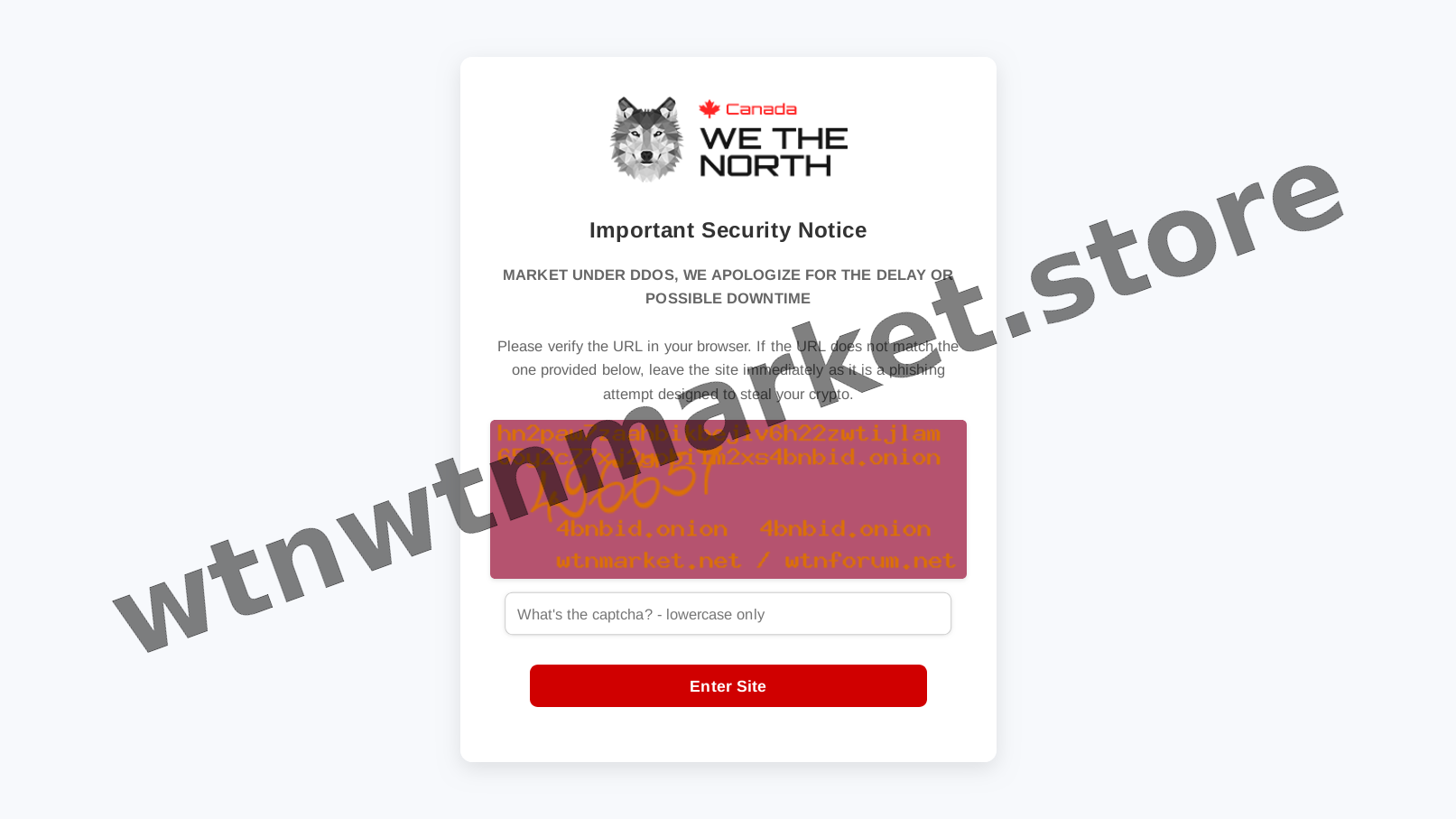
DDoS Protection Screen
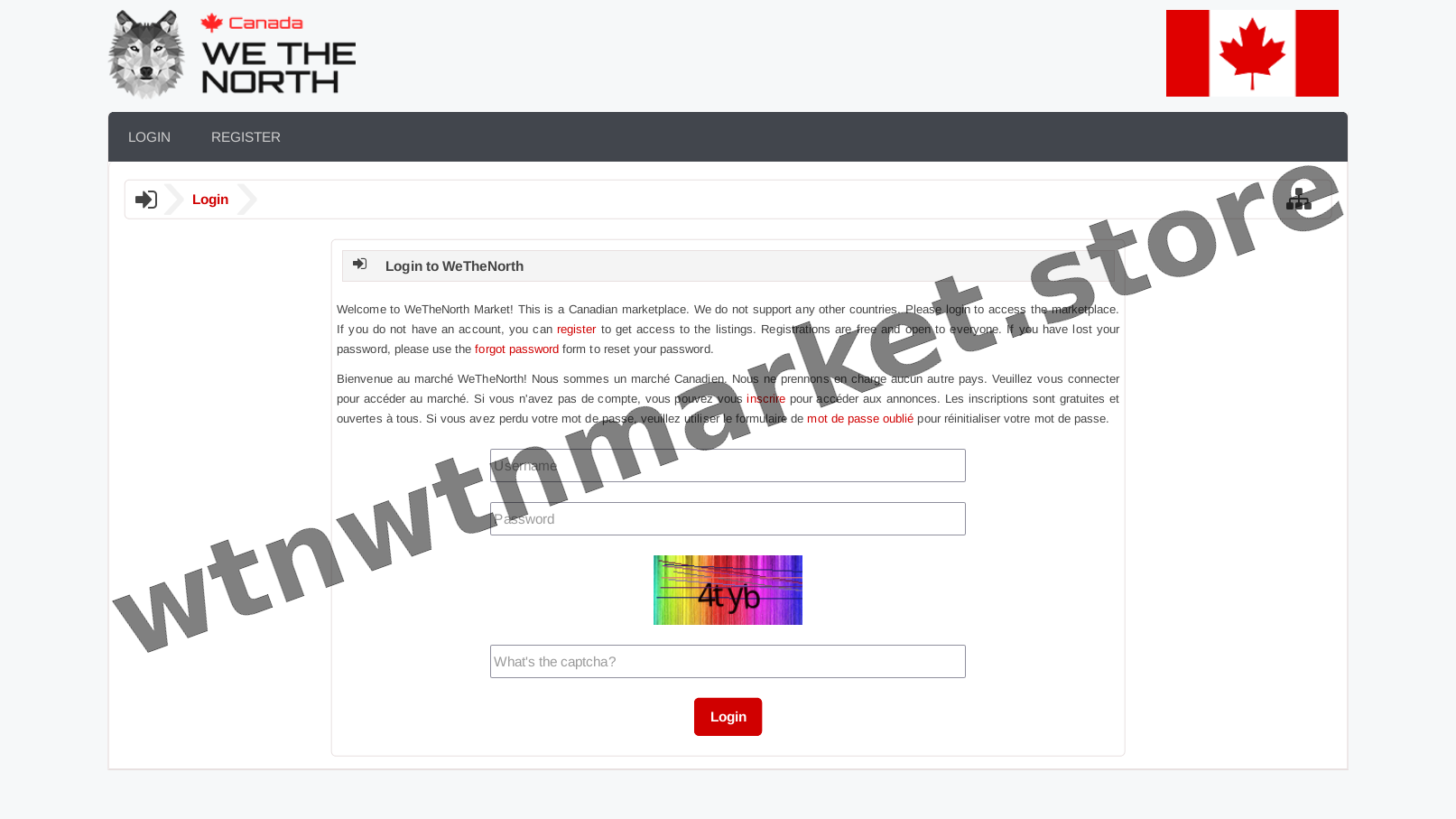
User Login Interface
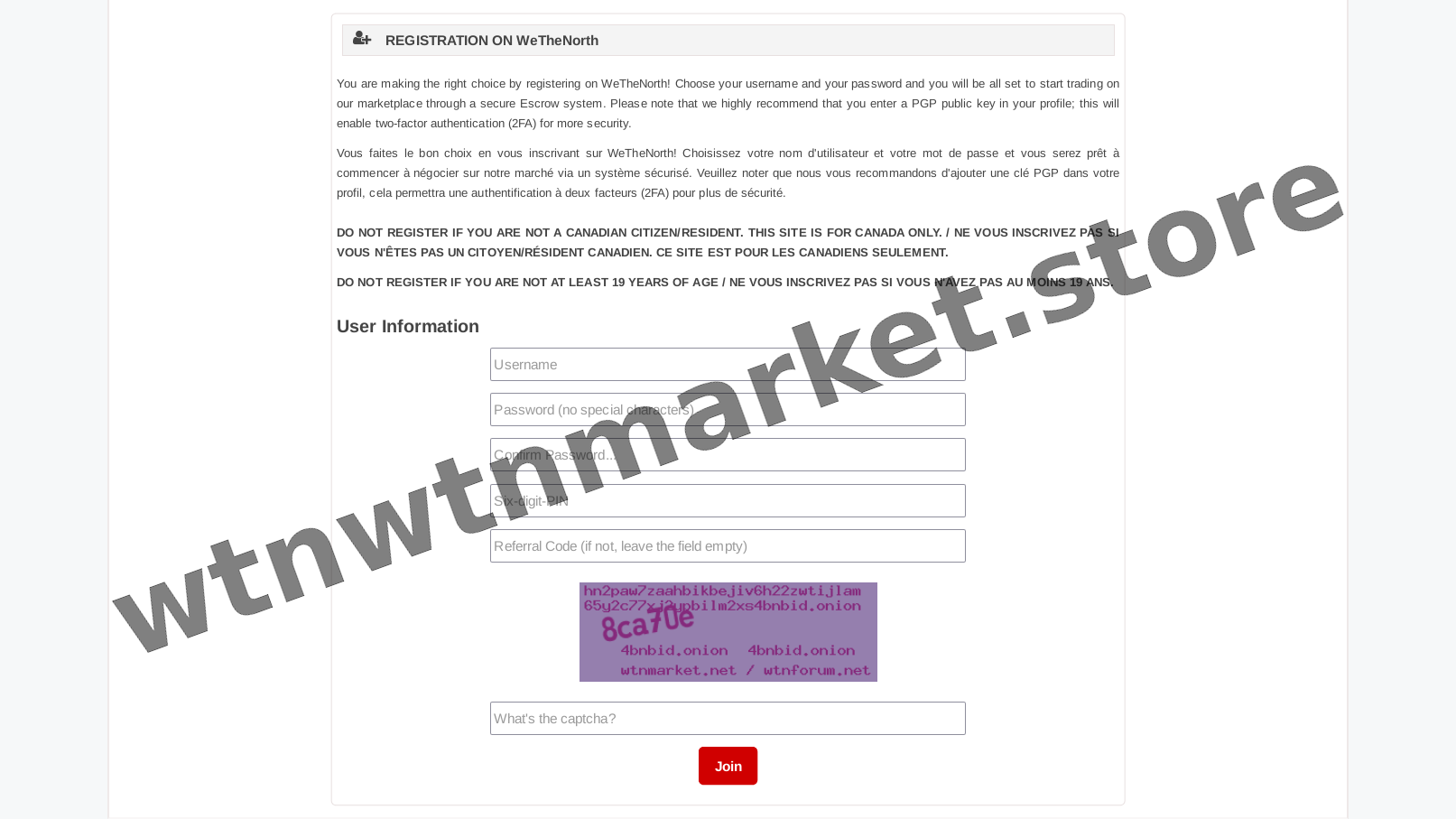
Account Registration Page
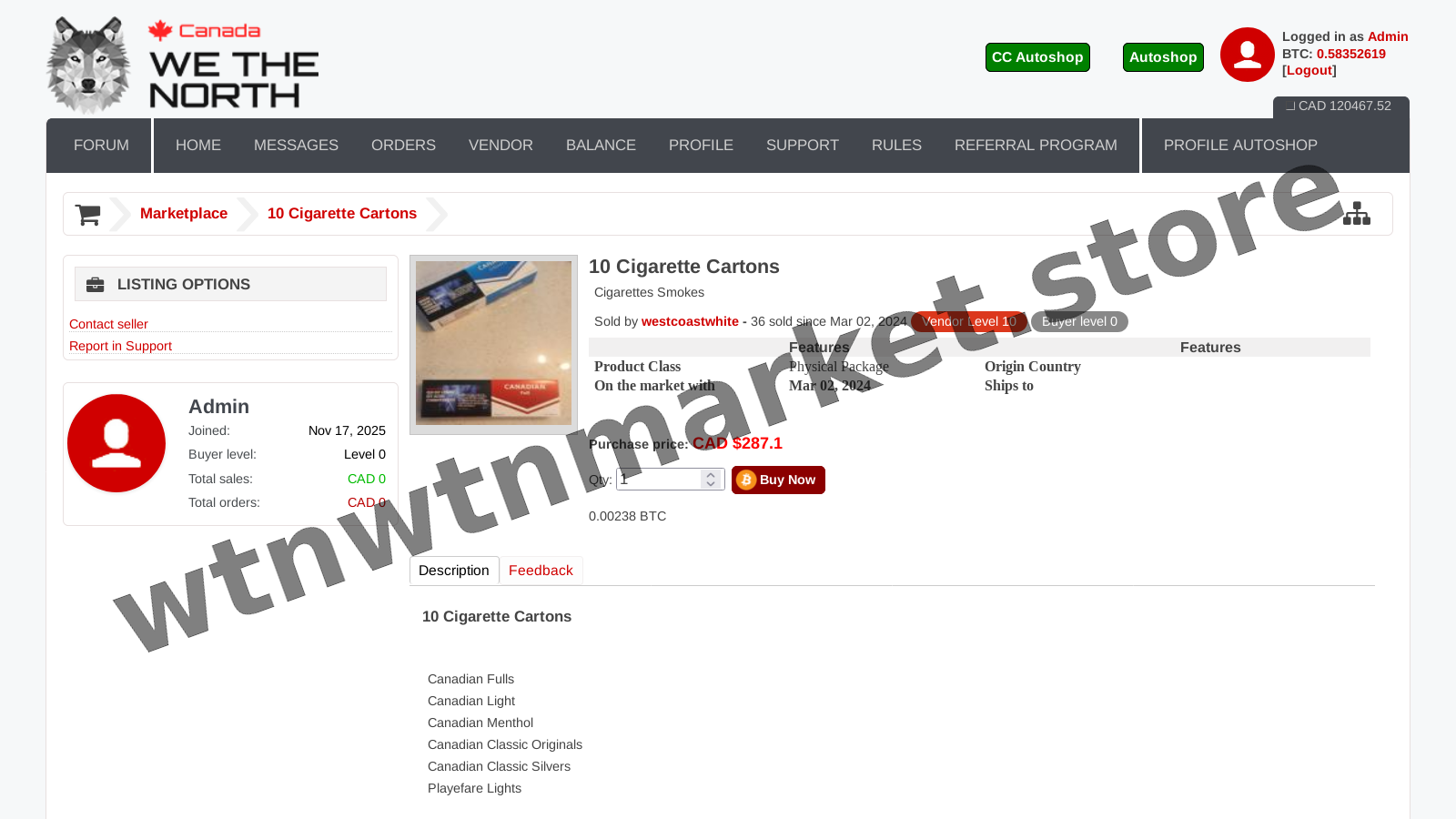
Main Market Dashboard
Community & Statistics
Estimated User Base
Active accounts documented based on public forum activity and network node requests.
Merchant Verification
Requires compulsory bonds and rigid PGP verification to mitigate sybil attacks and ensure quality.
Community Reputation
Maintains a localized focus, ensuring consistent supply chains and relatively fast dispute resolution.